
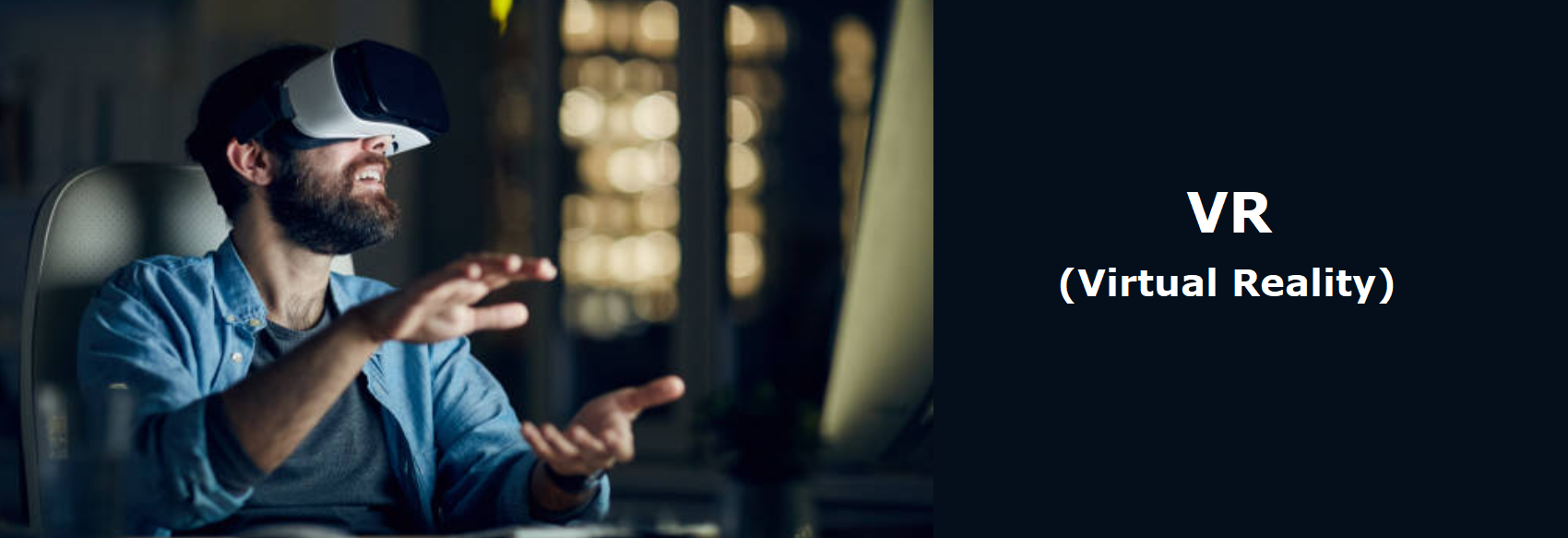
VR (Virtual Reality)
Virtual reality (VR) is a simulated experience that can be similar to or completely different from the real world. Applications of virtual reality include entertainment (e.g. video games), education (e.g. medical or military training) and business (e.g. virtual meetings). Other distinct types of VR-style technology include augmented reality and mixed reality, sometimes referred to as extended reality or XR. smart_toy
Metaverse
The word "Metaverse" is made up of the prefix "meta" (meaning beyond) and the stem "verse" (a back-formation from "universe"); the term is typically used to describe the concept of a future iteration of the Internet, made up of persistent, shared, 3D virtual spaces linked into a perceived virtual universe. The metaverse in a broader sense may not only refer to virtual worlds, but Internet as a whole, including the entire spectrum of augmented reality.
memoryAR (Augmented Reality)
As a field of virtual reality, it is a computer technique that synthesizes virtual objects or information in an actual environment to make them appear as if they exist in the original environment. If virtual reality refers to virtual experiences as a whole, augmented reality is a field of providing virtual experiences.
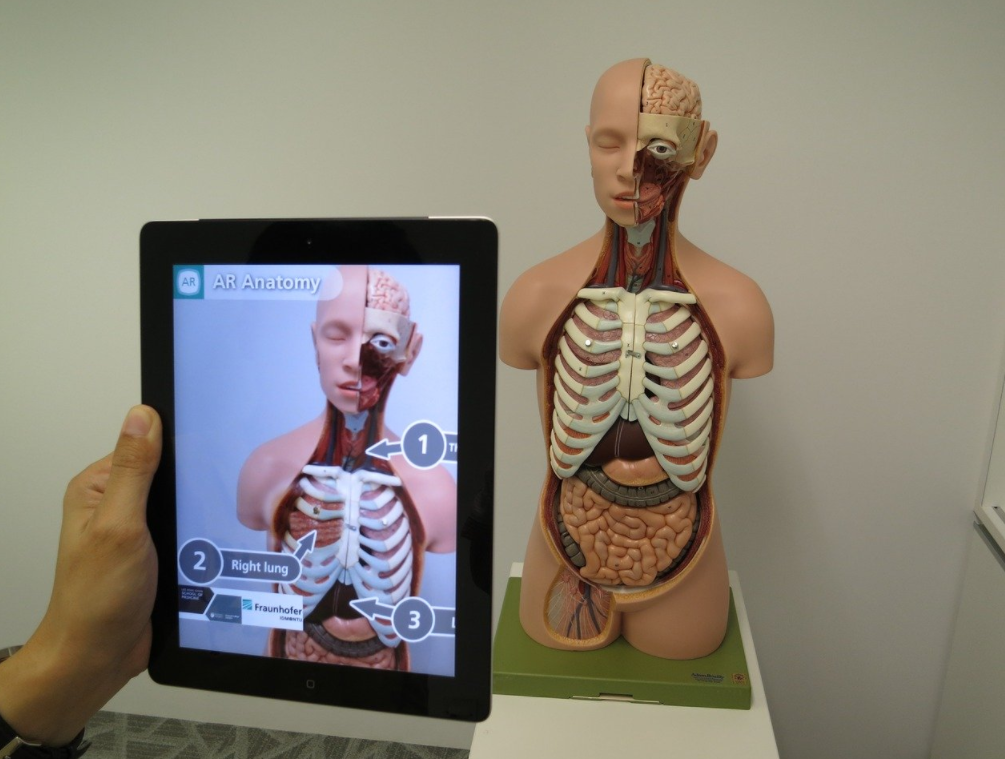
It shows real objects and virtual objects or information on the screen by synthesizing them using photos and a simple camera. It is different from the content for HMD, which is provided by creating the space itself as virtual content. A typical example is Pokémon Go. Each Pokémon is synthesized in the appearance of the street. Most of these virtual reality contents are produced using engines such as Unity and Unreal Engine.
smart_toy